
Grammar! What of it?
As you’ve likely noticed, here at Portuguese With Carla, we don’t tend to focus that much on grammar, at least, not in the beginning. For many that join our program, that comes as a big surprise. And some, in fact, give up because we’re not explaining the rules of the language as they would expect.
“I’m a beginner in Portuguese, I need to know the structure of the language, right?”
Well… Yes and no.
Let us explain.
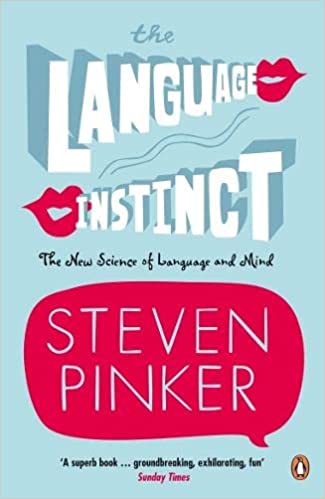
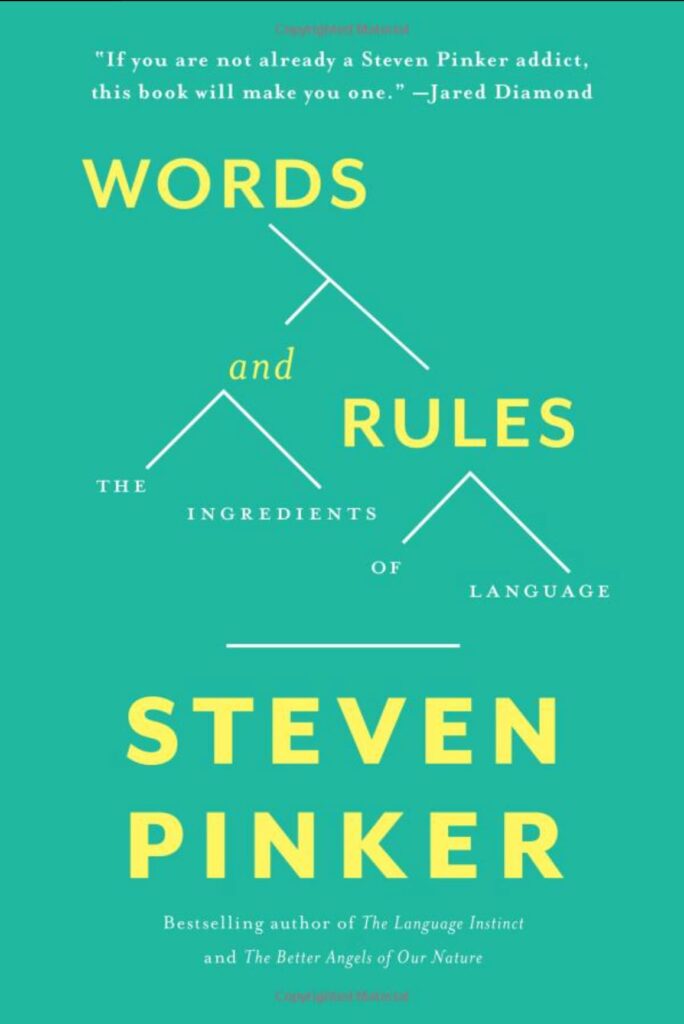
There’s plenty of research on this and if you want to geek out, then we would recommend the two “calhamaços” (thick books) at the end of this post.
Through all the digging into the literature, the experience of learning languages ourselves, and that of teaching it to others both here on the site and on a one-on-one/one-on-many basis, it is pretty clear to us, that consciously trying to memorize or even understand grammar rules as a primary means of learning a language is not helpful. In fact, we find that those students who try to “understand” every aspect of phrase structure, comprehend and compare lexical differences between their mother tongue and this new one, or figure out from the beginning the “whys” of Portuguese, tend to progress very, very slowly.
Here’s a fundamental truth on how language works: There is a difference between consciously knowing the rules of a language and being able to speak it fluently (even if you have plenty of vocabulary).
Here are 3 examples that demonstrate that:
- You don’t know all the rules of your mother tongue and yet you have no issues in communicating. In fact, unless you’re a linguist, you likely know only a fraction of them. Yet, the portion of your instinctive brain responsible for language is a master at every single one of those rules and whenever you open your mouth or lay your hands on a keyboard, it is able to maneuver all the mechanics of the language without you having a clue about it. There is a dissonance between your conscious language knowledge and your instinctive language skills.
- In linguistic studies, it is common to examine patients who have had some sort of brain trauma that left a portion of the brain inaccessible. We’re talking about sections of the brain connected to the language of course. You might have heard of Broca’s aphasia for example. In a series of studies, linguists asked patients, with a particular type of trauma, to explain how a certain aspect of the grammar in their mother tongue worked. No bother! The patients had no issue with this task. The interesting thing is that they could not produce speech that obeyed that very rule. That’s right! It seems their brain damage prevented them from being fluent, even though their “conscience-selves”, could quite easily break down the rules. There is a dissonance between your conscious language knowledge and your instinctive language skills.
- Another example is children. When children learn a language (and by the way, this happens in every language it seems), something funny happens with irregular verbs. You see, a child might blurt out to their parents: “Charlie eated the cake, not me!”. You can see what’s happening there. The child’s brain has learned that one must add the suffix “ed” after the verb stem/root when talking about something that happened in the past. What they haven’t learned yet, is that there are exceptions. Now the parents will of course come to the rescue with something like: “No, no, Peter! You must say ‘Charlie ate the cake’, not eated”. Well, guess what!? Until about the age of 5, parents can correct their child all they want, but he/she will continue to make the same mistake. It seems that until children get enough exposure to irregular verbs, which happens at about the age of 5, they will continue to make the same exact mistake. If you’re interested in looking at some research on this, have a look at this study. (It was done in Brasil, and as such, is also available in Portuguese). Anyway, the point is: there is a dissonance between your conscious language knowledge and your instinctive language skills.
Now let’s get back to the question you posed at the start (well, by proxy): “I’m a beginner in Portuguese, I need to know the structure of the language, right?”
The answer is: the instinctive part of your brain needs to. You, the conscious you, not so much.
The key then is to feed your brain with content. Let it drink as much of this language as possible. Exposure, exposure, exposure!
Also, practice as much as possible. There’s a reason we give you a few days gap between lessons. Because we realize how important it is to take time to practice what you learn. Some studies say you need to repeat a simple phrase 30 times until you master it. That is overly simplistic, to be honest, but it shows at least that simply knowing something, in theory, is not going to cut it in real life.
Example: So you finished a lesson on the conjugation of the verb SER in the simple present. You can write down the conjugation on a piece of paper. Great! But in real-life situations, in conversation, you’re going to stutter and get flustered. Why? Your conscious brain knows it, but your instinctive one doesn’t yet. Consolidation allows the transfer from one to the other.
Here’s an interesting thing we’ve observed with folks here on the site. The ones who progress the fastest, are not necessarily the ones who have done the most lessons. Not really. Here is the pattern of these successful learners:
- consistency – They log in and complete topics regularly
- no skipping – Students that skip parts because they think it’s below them, often go on to disappoint us (especially when it comes to pronunciation)
- consolidation – There is a strong link between those who complete these exercises diligently and their speed of language acquisition. Also, try using what you have learned immediately – See this video, and this one.
- perfectionism is an enemy – Don’t get bogged down in any section of the program for too long. If you lose your joy with numerous quiz attempts or long stints of Memrise, you’ll end up giving up. Just do your best with what you have and move on.
- exposure to outside content daily
This last point might come as a surprise, but if you think you will become fluent just by finishing our program… Well, I’m sorry, you won’t! But then that’s the case with any program available on any language. You need to get lots and lots of exposure. Read a newspaper every day, pick up a book in Portuguese. Even if it’s kid’s stuff, it doesn’t matter. Listen to podcasts, listen to the radio, watch YouTubers, and watch TV. No exposure, no fluency. What you do here on the site is not enough.
Now, does this all mean there’s nothing else we can do here at Portuguese With Carla? Could we help you a little more?
Despite all of the above, we realize that there is some benefit in knowing the blueprint of a language consciously. There is some benefit in knowing about grammar. More so for reading and writing purposes, but also in order to bridge the gap between the “two brains”. The error comes from focusing too much on it and asking too many questions. Especially at the beginning.
With that in mind, we started, a few months ago, working on some grammar stuff. We have nothing to announce at this point. Mainly because we have no ETA. But it will come when “The Journey” launches, hopefully later this year. we created some 80 grammar induction videos that are incorporated in The Journey.
Bolas, isto é que foi escrever, hem?! Um muito bom dia para todos, e não se esqueçam: Location, locati… Woops! Exposure, exposure, exposure!
Book Recommendations:






Thank you! This makes perfect sense. I promise to push myself!
I agree 100 per cent with your approach Marlon and Carla. I am currently doing the Intermediate Course (online) with the Centro da Línguas de Lagos. There is a big focus on grammar in that course but I am able to take the grammar onboard only because I have a sufficient base of vocabulary, syntax, phrases and language experience from doing your course and accessing other Portuguese language fora. I am in my 50’s and I believe that the key to learning a new language at an older age is to engage with it every day, even if just for a short time. I have been doing that over a year now and, as a result, when we learned how to manage Direct and indirect object pronouns last week, I discovered that I already knew “by ear” (as you would say in music) what sounded correct – even though I didn’t know why. Now I know why – and it is like shining a whole new light on something. You cannot start with the grammar. You reach a stage of readiness when you, as a learner, want to understand more – but you need quite a lot of experience of the language first.
I am really excited about this journey. Having been a teacher of English for my entire adult life, which is about 40 years, I am definitely ready to embrace this new approach that you are offering with your program. I love that you have a heavy focus on pronunciation, because that has been my passion in teaching. I’m noticing that my knowledge of Spanish, and even limited French, cause some confusion at times because of similarities, but I will do my best to just go with the flow. The biggest challenge for me has been with prepositions, but I’m just getting started.
Great article, thanks for this.
I always think about it as for example a child learns the mother language, they just surrounded by it without realising the grammar of it , so I do surround myself and immerse myself in it from all the sources possible such as music, books, here at Carla’s , talking to friends in Portuguese and I’m finding it very helpful. So in short immersion and lots of practice is the way for me, but I can only speak for myself.
Totally agree with this approach guys and thanks very much for explaining it so well.
Thank you! It’s really plausible and motivating. After the quite long journey to find European portuguese courses, I checked options to learn portuguese at the local community college or Language schools. But when I saw the mandatory literature is a book by one of the most known german school book publishers I got anxieties :))) Learning languages at school hasn’t been much of a pleasure. So I thought I give your concept a try. I enjoyed your free lessons a lot already.
Thank you Marlon, this was a very useful reminder for me. I think I was obsessing about grammar too much and also trying to get through the lessons quickly. However, I’ve now slowed down quite a bit and keep reading back through the lessons that I have done, making sure that I fully understand them before moving on. I keep promising to listen to more Portuguese radio/TV, so now you’ve reinforced that I will need to make more of an effort.
Thank you again,
Russ
This makes total sense ! And I will work as hard as I can and expose myself to the Portuguese language , tv , radio , etc
I have a Portuguese husband however it is a challenge for him to speak in the language with me as we are so used to communicating in English. I do understand a little bit of the language but not if there are a lot of people or if they are talking fast. I know I must immerse myself but how do I do that when there are no Portuguese channels on TV or the radio. I can use YouTube for some of this but if you or anyone else knows how to find Portuguese shows on TV , Netflix, Amazon, etc. please let me know. Also what books do you suggest for beginners and where can I buy them? Are there any where I can read them online? I know a course that I take for French has audio books on her website which is wonderful. In fact you might like to talk with her ( she speaks English too ) her name is Alice Ayel and she also started out by doing YouTube videos which she still does in fact. Her concept for language learning is very much like yours.
Boa tarde,
That’s understandable. It’s not as easy when you don’t live there, but there are some things you can use. We are slowly building a pretty big list of resources that we will use in a future update, but have you searched in our forums? There’s quite a lot there. Have a look at this discussion for example: https://journey.portuguesewithcarla.com/forums/topic/you-might-like-this-portuguese-tv-programme/#post-20973
Good stuff. Looking forward to this journey. We currently have plans to visit Portugal in April. Looking like that will get pushed to september. Now, i’m going to try to repeat what I just said, bit in Portuguese. Not going to stop and look stuff up, just going to do it and not worry about mistakes. Obrigado. Olhando em frente paracesta viage. Minha marida e eu temos planes para visitar portugal em Abril. Por causa do Covid 19, acho que nosso viagem estara em Septembro. Espero que posso falar portugues bastante bem em setembre para conhecer e conversar com pessoas portuguesas. Vamos
This is so helpful. I did terribly with English grammar and structuring sentences in school. And yet, I am fluent in my mother tongue. My husband is fluent in French, (with a Parisian accent,) having been raised there by English speaking parents. Yet, he cannot write in French as his knowledge of grammatical rules is limited. Thanks for putting the emphasis in this course where it belongs!
Thank you. You’re so very passionate about the language, and make it all sound so exciting, without the added stress of trying to absorb everything we see/hear. I am motivated to learn.
Glad it’s contagious 🙂
Thanks for the article, for me a new territory.
Thanks for this interesting article. I took notes and made the lesson 24. I also listened to Portugueses in the world, not that I understood more than e few words.
Thanks! And by the way, untill now enough grammar, even for me.
I must confess I am one of said students who needs to know the “whys”. I think psychologically there is something there. When you know the grammar and know what you’re saying is correct, it’s reassuring and gives you a lot more confidence with the language. I hate the feeling of not knowing what on earth I’m saying and if my interlocutor is going to understand me at all! Plus, it’s just interesting. My translator friends and I forever send each other links to pages about weird grammar things from other languages (“Wow, did you know in Basque they do ABC to convey XYZ?!”) I understand however that is probably quite a niche hobby…
That said, I completely understand your approach and grammar isn’t necessarily for everyone. I think this course will be a good complement for me in terms of a “hands off” approach to grammar. In a classroom setting, I find the no-grammar approach enormously stressful and just want to give up (and cry!), but when just doing a course by myself at home I can see it being extremely useful. A lot less pressure!
The course overall looks incredible, you both must have put a tonne of work into it. Looking forward to working my way through it 🙂
Thanks for the kind words Catriona. Well, I completely understand where you’re coming from. I too love to dig into the weird linguistic idiosyncrasies of a given language. There’s nothing wrong with that of course.
But it seems that when it comes to learning a language in practice, it doesn’t seem to help. The tricky thing is not to tie one thing to the other too much. 🙂
Like this approach. I’m excited to get started.
Glad we’re in synchrony 🙂
Viva a revolução
Thank you this makes so much sense plus it is the first time I have heard this on any language course I have looked at here in Portugal. It is refreshing and a good approach for someone like me who will worry about grammar and not move on to trying to communicate with what I have learned so far.
Glad we’re on the same page 🙂 Enjoy!
I have been studying Duolingo every day since April 2020 as a Covid relief plan to learn a language while I was house bound..I went to Portugal on a working trip in March 2020, and decided I wanted to learn European portuguese instead. I learned from your You Tube videos that MEMRISE was my better option to learn European Portuguese as Duolingo is Brazilian Portuguese! I have switched to MEMRISE now, and I am now ready for the JOURNEY, now that I have some correct words to study with. I am also working with a Portuguese instructor on ZOOM 3 days a week for a month now…I leave for Portugal in 2 weeks for a month to immerse myself in what I have been trying to learn for a year now, at home where no one speaks Portuguese !!
Obrigato polo sua aulas , Dave
sounds good to me as i am dyslexic and have nener learnt grammer in english as i could not read or write till i was 25
i don’t under stand gramer and never learnd it this will be a chalange as i am 74 now but want to learn portuguese
Eu amore isso, eu sempre penso isso, mas eu tenho vivo na Inglaterra. Can’t wait to get into it.
I’m looking forward to this approach. I find I’m very comfortable learning grammar (I actually like it), but I’m well aware that knowing grammar often isn’t helpful when trying to communicate with someone on the fly in your non-native language.
Thanks for the explanations.
Great Info! I’m excited to get started!
This makes sense!! Currently, I am taking free Portuguese classes at a local school. We are being taught Portuguese grammar and I have been struggling which has left me frustrated. Good to know it wasn’t me entirely 🙂 I needed to approach the language a different way. I am looking forward to the Journey
Estou lista, pronto!
Beautiful! Thank you.
Muito bem! The intro video is delightful!
I was smiling back at you during the video, as i feel i’m in the company of 2 lovely people, who i can really learn from. I’m impressed with your on camera presentation already, and this is just the first one!
Now i feel super-inspired to commit to the journey with you!
I like how you mentioned the patterns of the most successful learners: consistency, no skipping, consolidation, and exposure to outside content.
That all makes sense, and it’s much more my learning style, rather than being heavy on the grammar (although i do like to have a basic grasp of it, because i think it can help bring added clarity to speaking a language correctly)
Thanks for putting this all together – i can imagine how much work has gone into it!
Thank you so much for the kind words and we hope you do enjoy the program! 🙂
I’m totally onboard with this. My reason for studying Portuguese is to be able to communicate, to understand and be understood. It makes sense that the grammar will come with time and practice. This is my first time studying a language where I am super excited and also confident that I Can and I Will become fluent, even starting in my seventies.
Muito obrigada.
I did a short residential course in German. It was pretty intense but no grammar and I could have a short conversation by the end of it. Totally agree with the approach.
This makes perfect sense to now skip sections.
Boa tarde,
I am very interested and hopeful that your program can be my beginning of learning Portuguese. As a teacher from California I agree with everything you said about grammar and the knowing vs comprehending. Looking forward to learning. Vamos lá!
I’m so excited to begin!
Thanks for the great introduction. Eager to get started.
This approach seems to make perfectly logical sense to me. Thank you for the beautifully put, succinct article. I can’t wait to dive in and immerse myself in this beautiful language and culture! Muito obrigado pela ajuda!
I am a grammar nerd, and can understand written languages that I cannot speak. I am only able to speak English (I am American born) and Hebrew, since I lived in Israel. My Hebrew grammar is abysmal but I am able to converse and even understand lectures (at least partially, if it’s something I’m interested in). So, I will put aside, for no, my need to conjugate and parse, and follow your method!
It was such a relief to read about all the things that have been keeping me back! That might sound strange to some but, to me, it means I can now throw off these bad habits and start learning without all that baggage! Thank god I don’t have to worry about perfection anymore!
Glad it has helped! 🙂
That’s the spirit!
Carla and Marlon, I am excited to get started and my imagination is already engaged to see where the plot of The Journey will go and what places in Portugal & islands I will add to my travel list. Thank you for this and I’ll post more as I get into the lessons.
Thanks Nancy! 🙂 If you have any questions during your Journey, feel free to reach out.
Sounds like a plan…looking forward to the journey!
Ready to try your process
Ready to get started
Thank you! As a foreign language teacher myself, I completely agree with you. I’ve studied German for 4 years in university and before that at school, I still remember most of the grammar rules, but can only communicate on a very limited number of topics, because I haven’t had language exposure for about 6 years.
Love this approach. Can’t wait to start.
Absolutely makes total sense.
Thanks
I´m a linguist and speech therapist – and I will expose myself to your method. I´m curious. What I dont like, that I have to use a third language (english) to communicate with you, I´m german and I prefer to communicate in German or Portuguese in this context. But nevertheless I will beginn the Journey
Thank you Carla and Marlon for the thoroughness of your course; it gives me faith ( and therefore confidence) in what you are teaching me. I LOVE all the science-based principles of how we learn languages and I love Steven Pinker! As a teacher myself, I appreciated the passion and thoughtfulness that has gone in to your course and that inspires me to value your teaching approach. Thank you for the sanity of knowing that learning a language requires plenty of practice and for helping me, so succinctly, with the pronunciation which had been a nightmare until you explained it!
Thank you so much for the kind words. Really aprecciate it 🙂
Many years ago I was in the Canary Islands and made friends with a guy from Bangladesh. He was obsessed with Spanish verb conjugations and could rattle them off rapid-fire with his staccato accent. One day we went for lunch at a local dive called Jeremiah’s and the poor guy couldn’t even order food in Spanish. The waiter was not very sympathetic and made him point at things.
Big lesson for me.
Yep. That’s exactly what we are talking about. Thanks for sharing Randy! 😁
I think this is spot-on. Back as a kid in school (in the US), I loved French class, which was about 75% grammar and 25% memorizing vocab lists. Then I went to France and didn’t understand a word anybody said, and I was so discouraged. But now it makes total sense: I hadn’t been exposed to the language as spoken at a normal speed by native speakers. I wish I could’ve taken a language class more like this one!
I can imagine that being very discouraging. I had a similar experience with English. It’s just so clear to us that the “traditional method” is simply not the best use of one’s time when it comes to becoming fluent in the language.
I’m so relieved. Currently in the final stages of a 7week 30 hours A1 portuguese Kurse and feel completely discouraged to speak the language. Looking forward to put the fun back into learning. By the way I decided on this course when I remembered how I learned English. Like you I just moved there and started to expose myself. I never learned any grammar but interestingly, because I only read English books from the start my grammar is better than that of many natives. So looking forward to learning hear 😊
Muito obrigado!
It seems to me that I didn‘t do the whole chapter 1.
I am happy with this approach, it is hard to get the “let it go” part of it, meaning that I have to work on listening and keep going without questioning what I just heard, not trying to understand the structure, nor trying to memorize too much. My advantage has been the fact that I speak Spanish… although it is a bummer to find out that some words have different meanings than the ones I already know, like acordar, which for me means remember, and not to wake up… 😀 😀
Thank you…
Thank you. This is hopefully what I am looking for .Looking forward to learning the language
@andy-ger1 Happy to have you for the ride Andy 😁
As someone who struggles with perfectionism and overthinking every aspect of language, I am excited to dive into this new approach with abandon!
Glad your liking our approach thus far @humphreys-alexandra 😁
I appreciate the direction about not getting “bogged down” with the grammar rules. I also love being able to go back and take the quizzes again – it is much easier to move forward because I know I can “circle back” to refresh my understanding!
Glad you like it @debedmond Any further suggestions, send them our way…
I totally agree, as a mother and now grandmother, I have observed how children learn unconsciously. The brain our Creator gave us is amazing. So glad your course is based on how children learn.
@Yolanda Thanks for your nice comment. We’ve seen this work consistently. The issue sometimes is more of an individual resistance to the approach. This is not surprising, given that the usual methods people are exposed to most of their life are very different.
I personally don’t like the grammar part so I definitely agree with you both!!!
Incredibly happy with the approach. As a scientist I believe it’s better to learn this way as the subconscious mind can take more information.
Yes. I totally agree. I will do as Yoda said “Do or do not, there is no try” and focus to give my better ! 😉
Very interesting indeed. There’s truth in what you are saying – I have learnt quite a bit of vocabulary and basic grammar to be able to speak enough Portuguese to friends, family and to locals on holiday in Portugal by listening and making loads of mistakes. This was way before I decided to even formally learn the language and once some of the rules were explained to me things started to click in to place. 😉
I think what’s important, so native speakers can understand what your saying is being able to identify where the “Sílaba Tônica” falls in a word. And understanding how to pronounce the accents because this can change the actual meaning of the word which can be funny at times lol.
Good points. Obrigada
Looking forward to the journey.
even with just a few videos I could tell my husband how to say basic things lie how are you without thinking about it or mixing up french etc.
Olá, @louise-clark4 That’s fantastic to hear! I’m so glad our course is helping you confidently communicate in basic conversations. Keep up the great work! There’s more to come! 😉
I also fully agree with this approach grammer at the begginer creates fear of speaking thinking you are doing a mistake but a little of grammer knowing is always good like present past and future, singlar and pulural words etc
We are here to learn and you are our teacher
Olá, @abdikaadir-ali ! Thank you so much for your kind words! 😊 We’re really glad to hear that our approach resonates with you. We’re here to help you speak and enjoy the process. You’re doing great, and it’s wonderful to have learners like you on this journey with us. Keep going, step by step, you’re getting there!
This makes sense to me. I previously took a Portuguese language class where the instructor emphasized grammar heavily, and I often felt overwhelmed and lost. I ended up quitting the class.
Olá @lbento1 We’re really glad this resonates with you! We believe grammar makes much more sense when it’s learned in a more natural, intuitive way, little by little, in context. Keep up the great work in The Journey!
Muito obrigada Calra& Marlon! For all these information. I’m motivated to learn
Beijinhos
De nada, @Chaimae , we’re happy you enjoyed it! 😊
I highly appreciate your great efforts and mature, professional (yet also funny & engaging) approach.
Abraços to Carla and Marlon and to the entire Team! 🙂
Aww @Kasaizinho, thank you so much! 😊
That really means a lot to us and gave the whole team a big smile.
Thanks for being part of this Journey with us!
Absolutely agree with you! All of my life when I learned any language we started it from the grammar, etc, and now when I or We go somewhere abroad i ‘m very shame to tell anything. I don’t dare to use my knowledge. But I hope, sometimes i will traver to Portugal and i will able to speak with the local people. 🙂
Thank you everything!
Br, Melinda from Hungary
Thank you for sharing this, @csehmelinda1 😊
You’re definitely not alone, many people feel this way after learning through grammar first.
The good news is that with more exposure and practice, your confidence will grow little by little 💛
We hope you do come to Portugal one day, you’ve got this!
Makes sense
@lbento1 Glad it makes sense 😊
Interesting explanation on learning.
@imani534, So glad you found it interesting 😊
Just getting started
@ktheofel Welcome! 😊 Take it one step at a time, enjoy the process, and remember: exposure, exposure, exposure! 😉
This is very helpful and reassuring. I will practice everyday by speaking, listening and reading.
@jacklares That’s a great plan! 😊 A little bit every day goes a long way. Keep it up!